January 29, 2024
(Ä¢¹½´«Ã½ photo / Matt Wittmeyer)
Dear members of the Hajim School community,
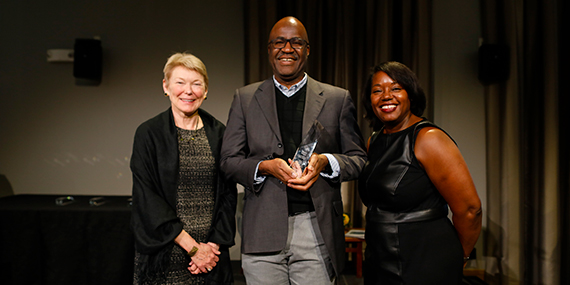
I’m pleased to share that one of the Hajim School’s leaders has been recognized by the University for his excellence in developing and sustaining an infrastructure to support equity, diversity, and inclusion. , the Wilson Professor of Electronic Imaging and chair of the , received the Advocacy and Action Award during last week’s Presidential Stronger As One Diversity Awards ceremony.
Marvin is the ideal recipient of this award, having worked tirelessly to improve the culture, climate, and infrastructure in the ECE department. Some of his many contributions include: creating the department’s first DEI committee to identify areas for improvement; hosting panels for important recognitions like Black History Month, Hispanic Heritage Month, Asian/Pacific American Heritage Month, and Women in STEM Month; ensuring faculty search committees are now explicitly charged with obtaining a diverse pool of outstanding candidates; helping to build the pipeline not just at Rochester but around the country by providing underrepresented students the opportunity to do research through the ; and working to make visible the contributions of outstanding scholars from all backgrounds, which serves as an inspiration for the faculty, staff and students within ECE.
Marvin’s commitment to this work is truly inspiring and I am thrilled that he has been recognized at the highest levels of the University. ÌýPlease join me in congratulating Marvin!
FERROELECTRIC MATERIAL PAVES THE WAY FOR NEXT-GEN MEMORY DEVICES
(Ä¢¹½´«Ã½ illustration / Michael Osadciw)
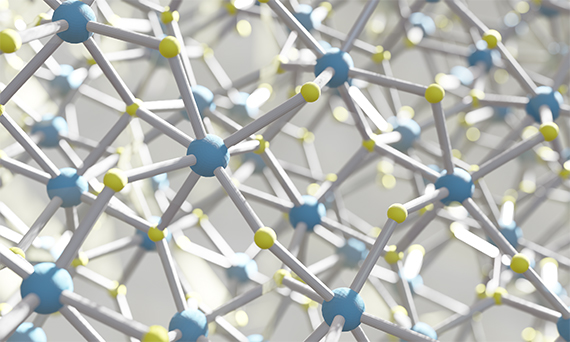
Scientists and engineers have been pushing for the past decade to leverage an elusive ferroelectric material called hafnia to usher in the next generation of computing memory. A team of researchers including , assistant professor in the ,Ìýpublished aÌýProceedings of the National Academy of SciencesÌýÌýoutlining progress toward making bulk ferroelectric and antiferroelectric hafnia available for use in a variety of applications.
“Hafnia is a very exciting material because of its practical applications in computer technology, especially for data storage,� says Sobhit, who performs theoretical calculations to predict material properties at the quantum level. “Currently, to store data we use magnetic forms of memory that are slow, require a lot of energy to operate, and are not very efficient. Ferroelectric forms of memory are robust, ultra-fast, cheaper to produce, and more energy-efficient.�
Read more about this interesting new study at the News Center.
MARC POROSOFF RECEIVES SCIALOG AWARD FOR NEGATIVE EMISSIONS SCIENCE
(Ä¢¹½´«Ã½ photo / J. Adam Fenster)
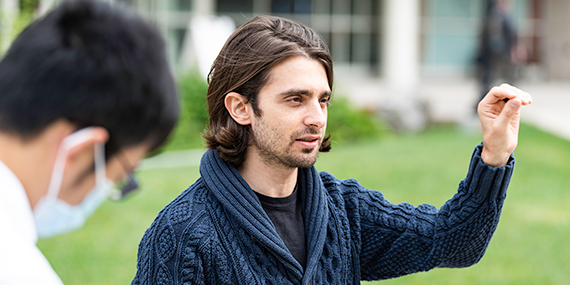
Congratulations to Marc Porosoff, an assistant professor from the who is on one of seven cross-disciplinary teams of early career scientists in the fourth and final year of . The , the  andÌý made the awards, which aim to advance the underlying science needed to make technologies to capture and utilize greenhouse gases globally scalable..
SCHWARTZ DISCOVER GRANT APPLICATIONS OPEN
(Ä¢¹½´«Ã½ photo / J. Adam Fenster)
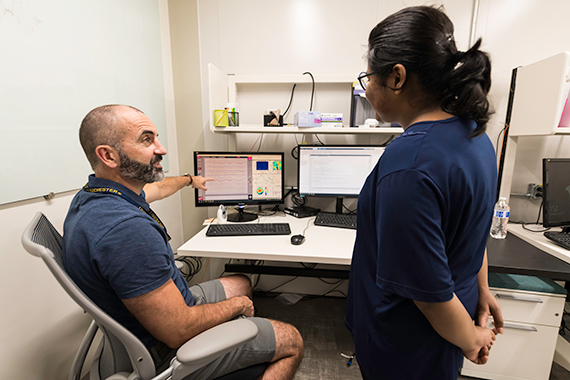
TheÌýapplication period for summer research funding is now open. All current University undergraduate students who will be returning in the fall semester and are planning to do unpaid research this summer under a University supervisor may apply for the Schwartz Discover Grant for summer undergraduate research funding. The application deadline is March 3
There will be an “Ask an Alumâ€� workshop for students to bring their application drafts for feedback on Thursday, February 15, in the Feldman Ballroom, Douglass Commons, from 5 to 7 p.m. Contact theÌýÌýviaÌýemailÌýwith questions.
Read this profile of Sophea Urbi Biswas ’24 for an example of the enriching experiences Schwartz Discover Grant recipients can have.
LLE LAUNCHES QUARTERLY PUBLICATION
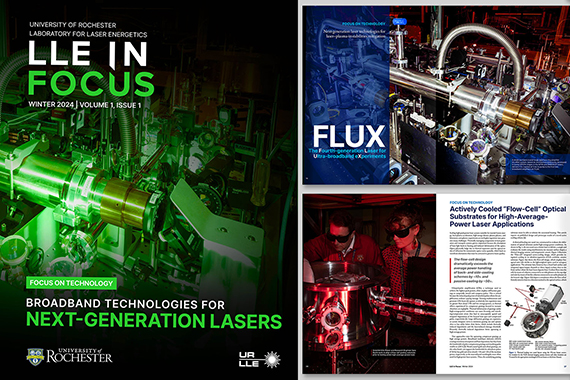
The Laboratory for Laser Energetics (LLE) released the first issue ofÌýLLE in Focus, a quarterly magazine-style publication that shines the spotlight on the accomplishments, technological advances, and cutting-edge research performed at LLE. Each issue will feature a specific theme, in addition to highlighting graduate students, awards and honors, and updates from the facility.
This edition features wonderful profiles of several LLE researchers who recently completed their PhDs at the Hajim School: Xuchen Gong (), Ruobin Jia (), and Somto Nwabunwanne (). .
GENERATIVE ARTIFICIAL INTELLIGENCE TEACHING GROUP
Instructors teaching courses that enroll students in the Hajim School are invited to join a spring semester Teaching Center group that will discuss the implications of generative AI for teaching and learning and share resources and teaching ideas. Participants will consider how to revise courses in response to generative AI and how and whether to integrate generative AI into student or instructor work. This group will meet in person six times on Thursdays from 3:30 to 4:30 pm.ÌýÌý.
Have a great week!
Your dean,
Wendi Heinzelman

